Join Your Islands
It's a weird time for design. We're in the middle of a technology evolution where AI is bringing us different ways of working that are challenging a lot of foundational design practices and ideas. Whether you're trying to navigate these waters as part of a company, or on the hunt for the right next opportunity, there is a lot of advice out there about what you should be doing to stand out and get noticed in a very busy market.
The struggle is real! Designers are applying to hundreds of jobs and getting rejected or ghosted right and left, so advice for how to differentiate yourself is relevant and widely available. One tactic I see occasionally suggested is that in order to build a personal brand, you've got to have loud and perhaps controversial opinions and make sure they're known.
Social media is a particularly well-suited vehicle for this endeavor.¹ As I was idly swiping and tapping around the internet recently, I encountered one of these pieces of advice. Be loud! Call out bad design! Make sure people know that you know what's bad. May your takes be frequent and scalding. This is certainly not surprising advice to hear on the internet where there can be a lot of value to a post going viral.
In truth, being loud and calling out injustices can be a great thing. As hard as this sometimes is, we should practice doing it. But I don't think that was what this post was getting at. The idea here was to tear down bad designs to show the world (or at least potential employers) that you have opinions and are more capable than the designers whose work you're critiquing.
To me, there is a fine line to walk between differentiating yourself from others through your criticism of someone else's work, and being destructive to building community.² Perhaps it lifts you up out of the sea of blind re-posts, as an individual pillar worth referencing — worth the taps and swipes. But what it also does is show the rest of the community that the way to rise up in your industry is to push others down.
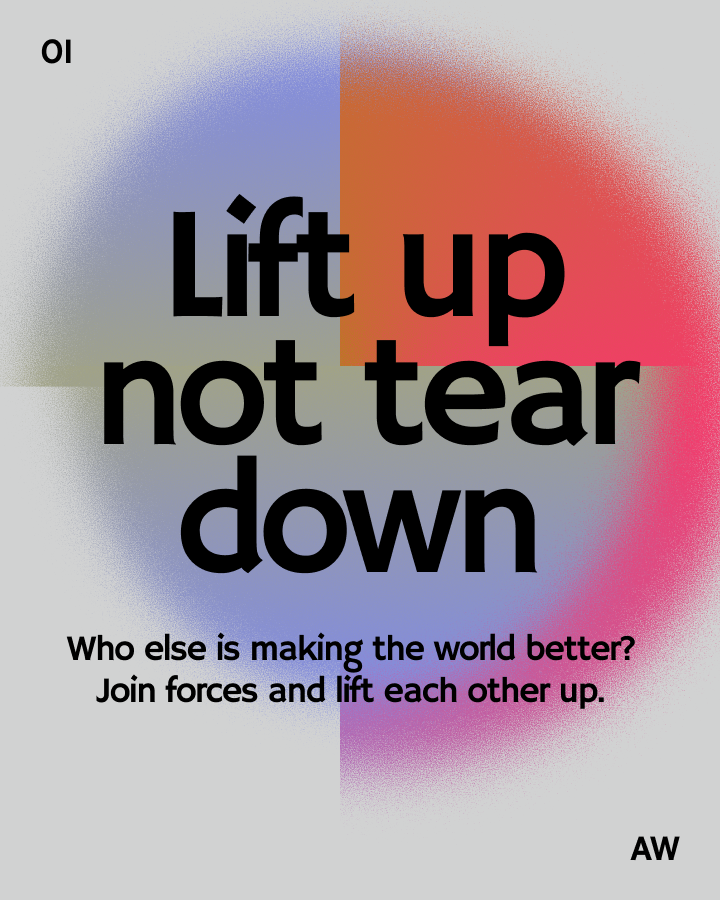
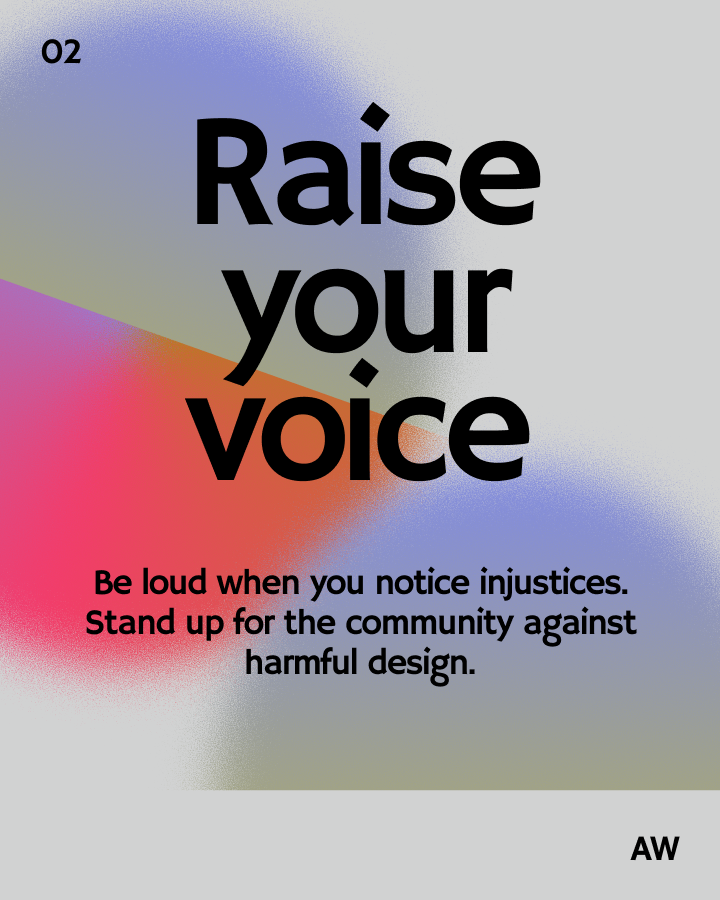
There is certainly value to critique, especially in design. Challenging design decisions makes design better. If no one speaks up about predatory design patterns they will continue to cause real harm. In fact, there are laws that guide product design that exist because of people who stood up to corporations and won.³ This type of criticism is not just good, but essential. We must rise up against those trying to use design to harm people. It's not individualistic enterprising, but someone speaking up to advocate for their community. This is a good thing.
So criticism isn't bad. Pushing hard is good. It's what you bring to it that makes a difference. If you're tearing something down, how are you also bringing something else up? How is your criticism not just helping yourself, but helping the community? How are you making our world, the internet, our design community, a little bit better?
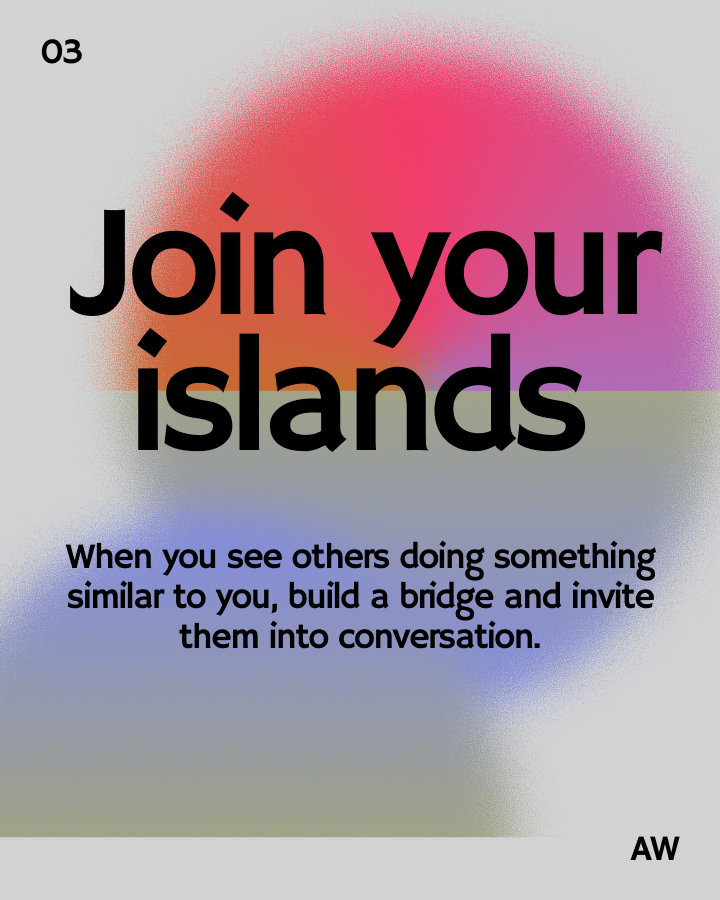
It is admirable, I think, to work on something that matters. And as your creation or your vision materializes, you build a little island with its own unique ecosystem. You have built something that perhaps, others can start to find on a map as they're charting their own journeys. An island that people want to visit because what you're making is something you really believe in. Deeply-felt ideas find audience. If you believe in it and it's good for people, it will resonate with someone else who will want to visit your island. It will be a regenerative force.⁴
As your island's ecosystem strengthens, you might notice that you're not the only one and that there are other similar islands out there. Don't wage war on these islands! Join them instead, seek coalescence. Build bridges to these islands, create a network of islands. Tell the people who visit your island that they'll like your neighbors too. And one day all of the dots of islands in this great big sea might start to join together to create a movement that none of them could have done alone. Joining together is powerful. It's good for your island and for the world.
It's our responsibility as people who have been around for a little while to show people newer to the work what should be valued. Do we want to show the next generation of designers that in order to make your way, you should be skilled at telling other people why they're wrong? Or do we want them to hone their skills of lifting up the people around them and learning from them along the way? Honestly, both of these things are probably good skills to have as designers. But it's how we frame those skills that ends up incentivizing behaviors that the community is built upon.
Personally, I'd much rather have a team of designers who are always trying to lift themselves up alongside others, joining their islands together to realize the surprising and unique ideas that can only come from supportive collaboration. As we navigate through the uncertain waters of the current state of our industry, let's fill our spaces with intentions that reflect the values we want to see grow within the next generation of designers.
Notes
- If considering alternatives to toxic online social platforms is something that piques your interest, head over to New Public, who is doing meaningful work to re-think what online communities can be.
- I love Ida Persson's perspective in her post, From Artificial to Authentic, "There’s a difference between the desire to be seen and the courage to be seen. The desire is often rooted in external validation — wanting to be liked and wanted... The courage to be seen is about showing up as our full selves."
- For example, when the weight loss app Noom reached a settlement of $62 million when Geraldine Mahood called them out for misleading users during the sign up flow and then tricking them into hidden auto-renewals. Deceptive Patterns is a great resource for learning about this type of predatory UX, an overview of international laws governing the use of these patterns, and a good example of calling out harmful design in a way that is holding companies accountable for their actions.
- The idea of our work as islands is in part inspired by this interview with Janine Benyus and Azita Ardakani. "[Regeneration] happens in these little islands that then spread out and meet."